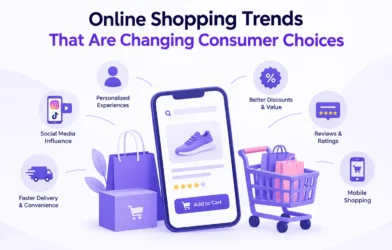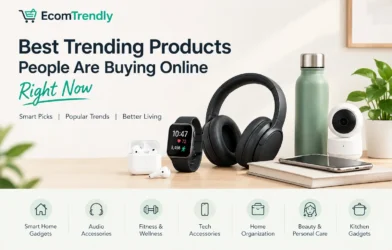
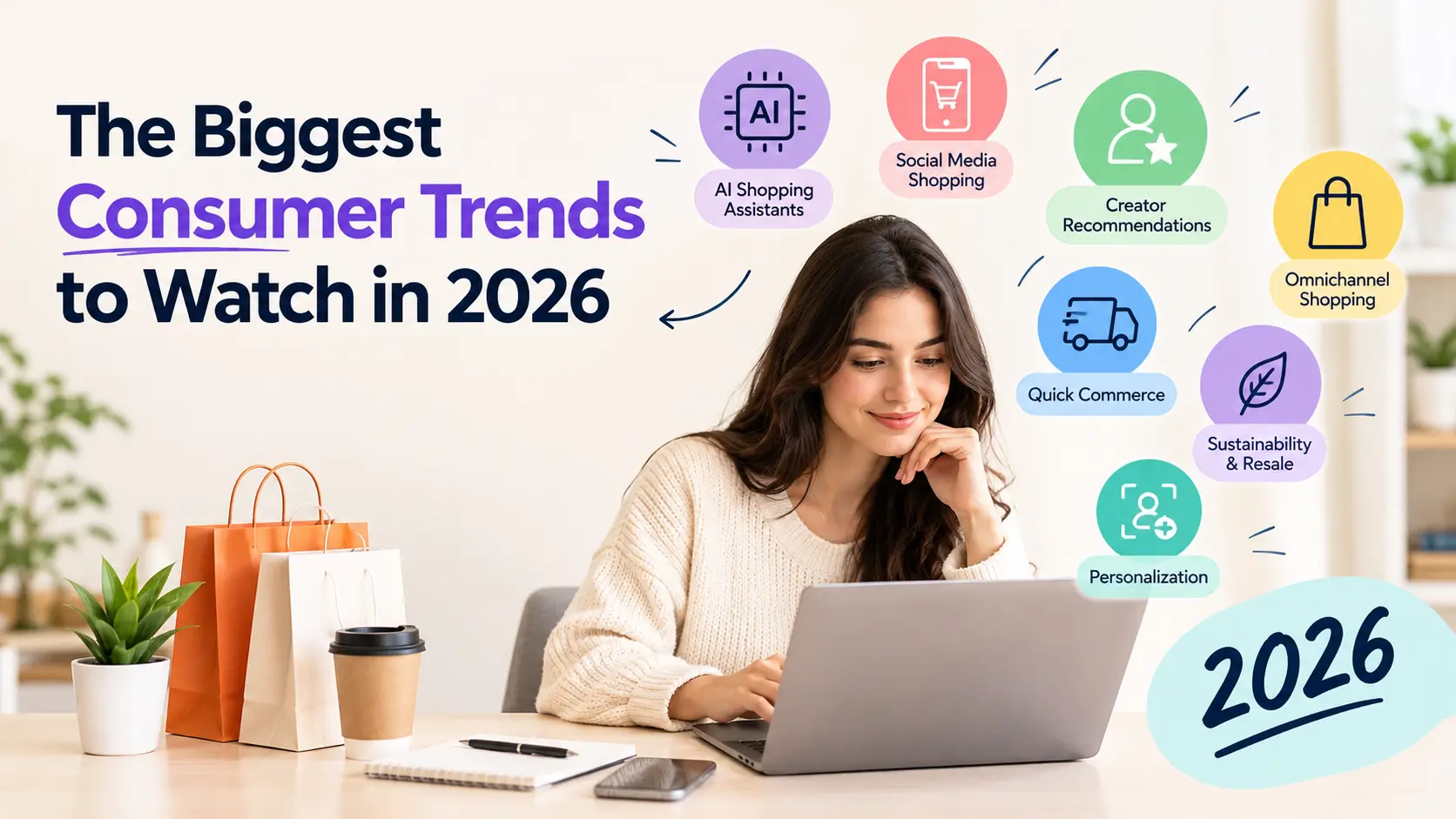
Consumer behaviour is changing faster than it’s ever changed. Our traditional approaches to search, compare and purchase products are challenged by new technologies, consumer expectations are changing, social media and other changing consumer habits.
In 2026, the consumers are getting more picky. Their focus is on convenience, value, personalisation, transparency and facilitation in shopping! Here are some of the greatest consumer trends for the year!
AI is Emerging as a Shopping Assistant
AI has transcended just the chatbots and content creation and now is a part of the shopping experience. The AI tools help the consumers find the products, compare options, summarize the review and share some recommendations.
Shopify reports a significant rise in AI traffic to Shopify stores and Deloitte points out that AI has become a more prominent feature in the consumer shopping journey in their research and product evaluation.
What this means, is that shoppers will not need to click through to an average of 30 websites before making their purchase. Instead, they can instead ask the artificial intelligence assistant to help them find filters for decision-making.
Value Crosstabulates Each Value to Each Big Discount
Individuals are becoming pickier with what they are buying. Value, however, is not just the lowest price, though.
It can affect one whether it seems like a good deal or not with the shopping experience, warranties, convenience features, customer service, durability and quality. Permanent change is also the reality for retailers these days as consumers are looking to pay what they believe they are worth, Deloitte’s 2026 Projection states.
For the buyers of any product this deal of 50% off certainly does not count if they find the quality of the product at this price isn’t of any good value, or the product doesn’t fulfill their needs at all.
Social Media is Turning Into a Shopping Area
The fun and games of social media is no longer confined inside the entertainment box. As a recent trend in the product discovery game, short-form video videos, creators, reviews, and shopper suggestions simply can’t be overlooked.
According to the findings, a significant part of the retail purchase decision depends on their social media experiences in India, and short form video and creators/content creators/influencer content is emerging as a major driver of the product discovery process.
From being discovered in a video in a few minutes, a product can now be researched and purchased within a few minutes.
Creator Recommendations
When consumers see a product they are consuming them; they are seeing it in action, whereas they don’t read about it or watch it on TV.
Creators, reviewers and everyday customers can provide demos, comparisons, opinions, which enhance the ease of evaluating products. In particular, in the fashion, beauty, gadgets, food and lifestyle industry.
But availability isn’t the only thing that consumers are questioning. It may be better to make some good talks/shows and give them good criticism, than create elaborate marketing materials.
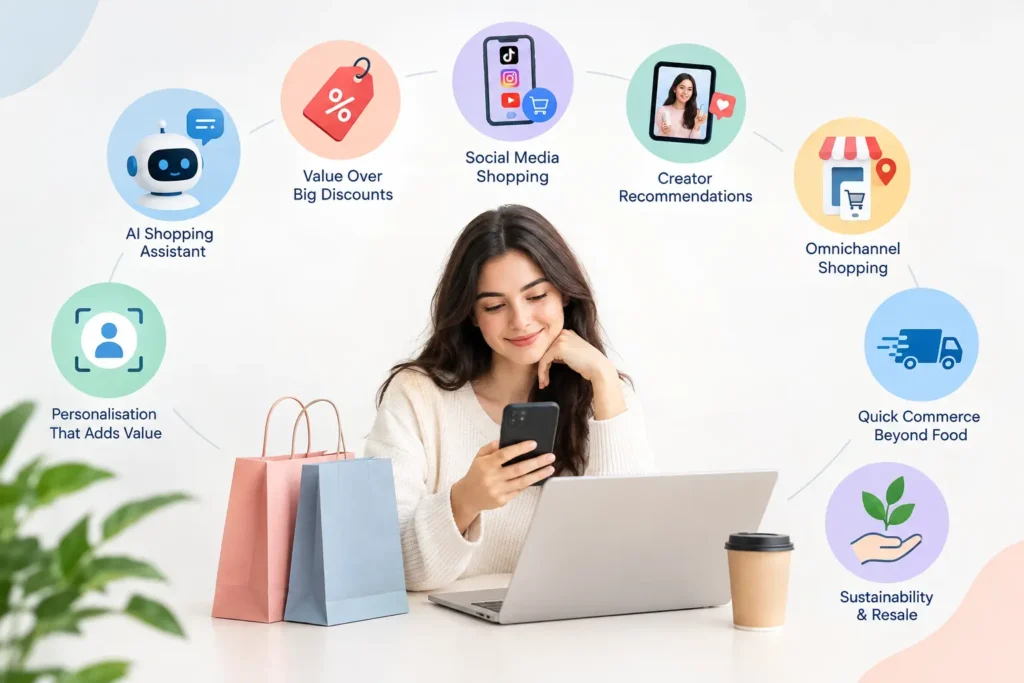
An Omnichannel Strategy is Farther Down on the Priority List
There is a shifting attitude of the preference to online shopping over offline.
A consumer may find a product on social media, research them with the help of an AI tool, stop by a physical store to check out what they’re looking at and end up buying the product on their cell phone.
The study of the metaresearchers and the RAI highlights that consumers of India are beginning to switch off from the online to the offline platform from the same shopping experience.
This provides consumers with greater options. They can choose the channel they believe is best suited in terms of both price and convenience and experience, availability.
Quick Commerce is Extending Beyond Food
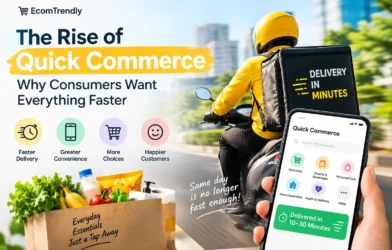
Demand for ‘quick delivery’ stigma particularly in urban markets. In addition to grocery, the quick commerce companies are expanding into other segments like electronics, beauty, personal care, and lifestyles — not only retailers.
Quick commerce and digitalized shopping will also help to propel India’s ecommerce industry further, while it is small and low-tier cities that will also rise to the occasion and become MUCH more significant for the expansion of ecommerce.
Cost isn’t all that matters with new values on cost among consumers – and as to where, or how fast, they receive their purchases.
Everything that’s Personalised Must Not Be of No Use
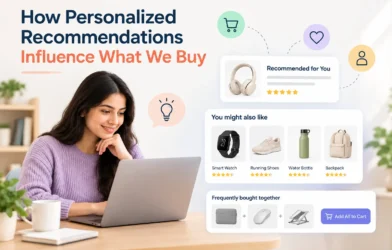
Consumers value suggestions which are of real use to them. This will save you time looking, thereby freeing up your personal customer time.The more customer time you spend, the more personal product suggestions, offers and customised shopping will be provided.
With personalisation too comes privacy and data usage issues. A survey by Capgemini shows that enterprises will be using AI to provide benefits to their customers, but they will ensure it is transparent, and the control over how their data is used.
Knowing more about the customer is the quaint phrase for best personalisation. It’s about providing good value for that information.
Sustainability and Resale Has Continued to Expand
However, sustainability is still not top-of-mind, and the demand in the market is for evidence of sustainability, not green-speak.
For the longer term retailer, products with a longer service life, repair, re-use, re-sell may be more attractive. DHL’s 2026 ecommerce research also shows an increasing demand for consumers regarding sustainability and the opportunities for circular shopping.
Final Thoughts
One of the biggest of these consumer trends that was brought about is the desire to make shopping smarter, faster, more personal and more connected which will be unfolding in 2026.
AI gives consumers power of choice, social media is influencing how they’re finding products, creators are looking to strengthen their platform and the notion of ‘omnichannel’ shopping is making it easier for buyers to use their shopping journey. Consumers in the meantime have become more aware of the price, quality, privacy and sustainability.
As a consumer, you will end up better informed to make decisions on your purchases if you know what’s happening, and are massively helped by taking a few moments to navigate these trends. For brands and retailers, Presto’s flexibility to deliver their clients changing requirements is essential to staying relevant over the years.