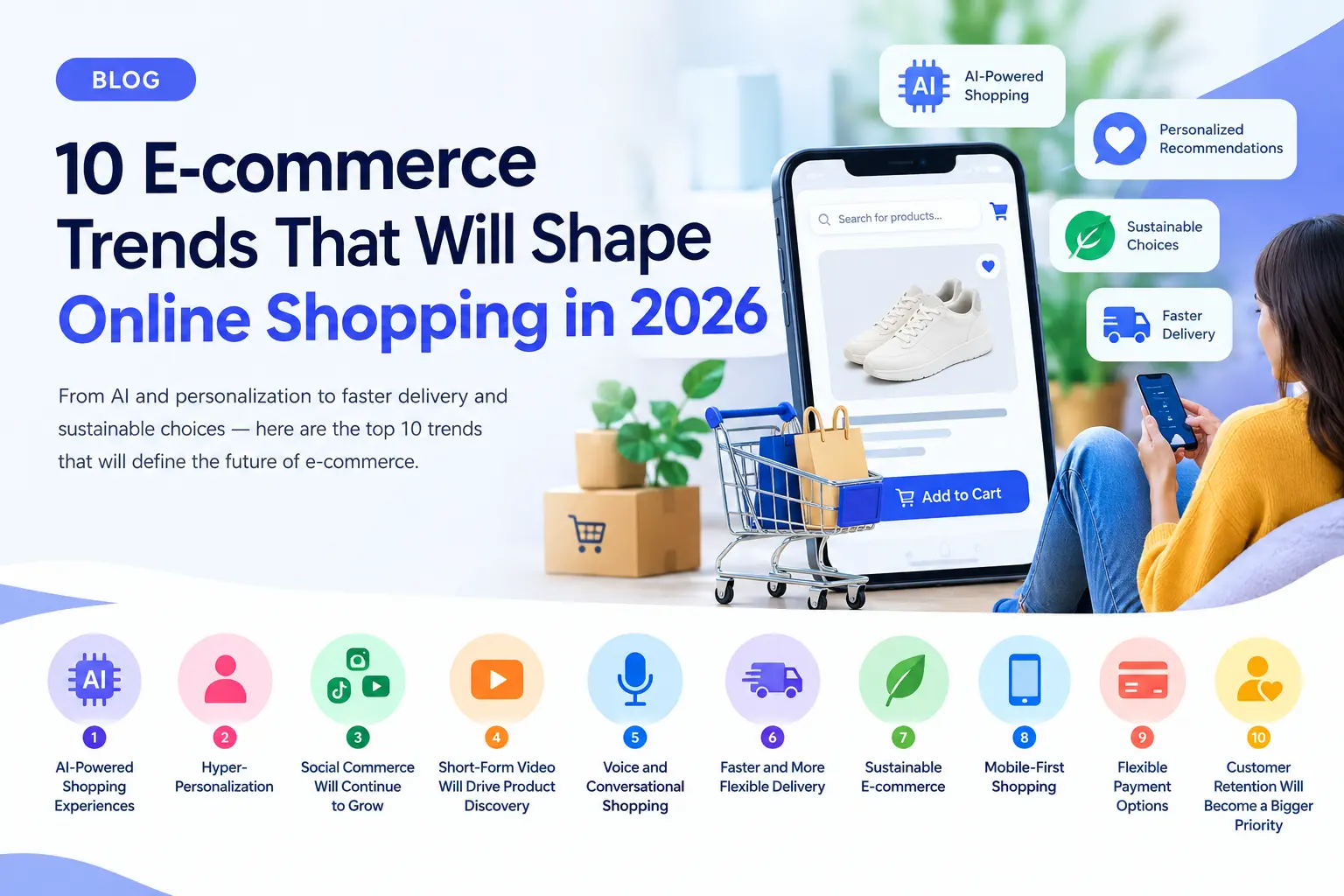
The e-commerce industry continues to evolve rapidly, changing how consumers discover products, make purchasing decisions, and interact with brands. In 2026, online shopping will become even more personalized, intelligent, and experience-driven. Businesses that understand these changes and adapt early will be better positioned to attract customers and increase sales.
Here are 10 e-commerce trends that will shape online shopping in 2026.
1. AI-Powered Shopping Experiences
Artificial intelligence is becoming an essential part of e-commerce. In 2026, AI will help customers discover products based on their preferences, previous purchases, browsing behavior, and real-time needs.
AI-powered shopping assistants can answer questions, recommend products, compare options, and guide customers through the buying process. For businesses, AI can also improve customer support, inventory management, marketing, and sales forecasting.
2. Hyper-Personalization
Customers increasingly expect brands to understand their individual preferences. Generic recommendations are being replaced by personalized product suggestions, offers, emails, and website experiences.
E-commerce brands will use customer data and AI to deliver more relevant experiences. From personalized homepages to customized promotions, hyper-personalization can help businesses improve engagement and customer loyalty.
3. Social Commerce Will Continue to Grow
Social media is becoming more than a platform for discovering products. It is increasingly becoming a place where consumers can complete their entire shopping journey.
Platforms such as Instagram, Facebook, TikTok, and YouTube allow brands to showcase products through videos, creators, reviews, and shoppable content. In 2026, businesses will increasingly integrate social content with their online stores to make purchasing faster and easier.
4. Short-Form Video Will Drive Product Discovery
Short-form video has transformed how consumers discover products. Product demonstrations, tutorials, reviews, and behind-the-scenes content can quickly capture attention.
E-commerce brands that create useful and authentic video content will have more opportunities to attract potential customers and turn product discovery into sales.
5. Voice and Conversational Shopping
Voice search and conversational interfaces will become increasingly important. Consumers may use voice assistants or AI chat interfaces to search for products, ask questions, and receive recommendations.
Businesses will need to optimize product information and content so that their products can be easily understood and discovered through conversational search.
6. Faster and More Flexible Delivery
Delivery speed remains an important factor in online shopping. Customers increasingly expect convenient delivery options, accurate tracking, and flexible return policies.
In 2026, e-commerce businesses will continue investing in faster fulfillment, local warehouses, automation, and improved logistics to provide a smoother post-purchase experience.
7. Sustainable E-commerce
Sustainability is becoming an important consideration for many consumers. Customers are paying more attention to packaging, product materials, shipping practices, and the environmental impact of brands.
Businesses can respond by reducing unnecessary packaging, using recyclable materials, optimizing logistics, and communicating their sustainability efforts transparently.
8. Mobile-First Shopping
Smartphones remain central to online shopping. Consumers use mobile devices to search for products, compare prices, read reviews, and make purchases.
E-commerce websites will need fast loading speeds, simple navigation, mobile-friendly checkout processes, and seamless payment options to deliver better mobile experiences.
9. Flexible Payment Options
Payment flexibility can directly influence purchasing decisions. Digital wallets, UPI, buy-now-pay-later services, and other payment methods are making online transactions more convenient.
Offering multiple secure payment options can reduce friction during checkout and help businesses serve a wider range of customers.
10. Customer Retention Will Become a Bigger Priority
Acquiring new customers can be expensive, making customer retention increasingly important. In 2026, brands will focus more on loyalty programs, personalized communication, exclusive offers, excellent customer service, and post-purchase engagement.
Building long-term customer relationships can increase repeat purchases and create loyal brand advocates.
Conclusion
The e-commerce landscape in 2026 will be shaped by AI, personalization, social commerce, mobile experiences, faster delivery, flexible payments, and customer-focused strategies. These trends represent more than technological changes—they reflect evolving customer expectations.
For e-commerce businesses, the key is not to follow every trend blindly. Instead, brands should identify the technologies and strategies that align with their customers and business goals. Businesses that combine innovation with a strong customer experience will be better prepared for the next phase of online shopping.