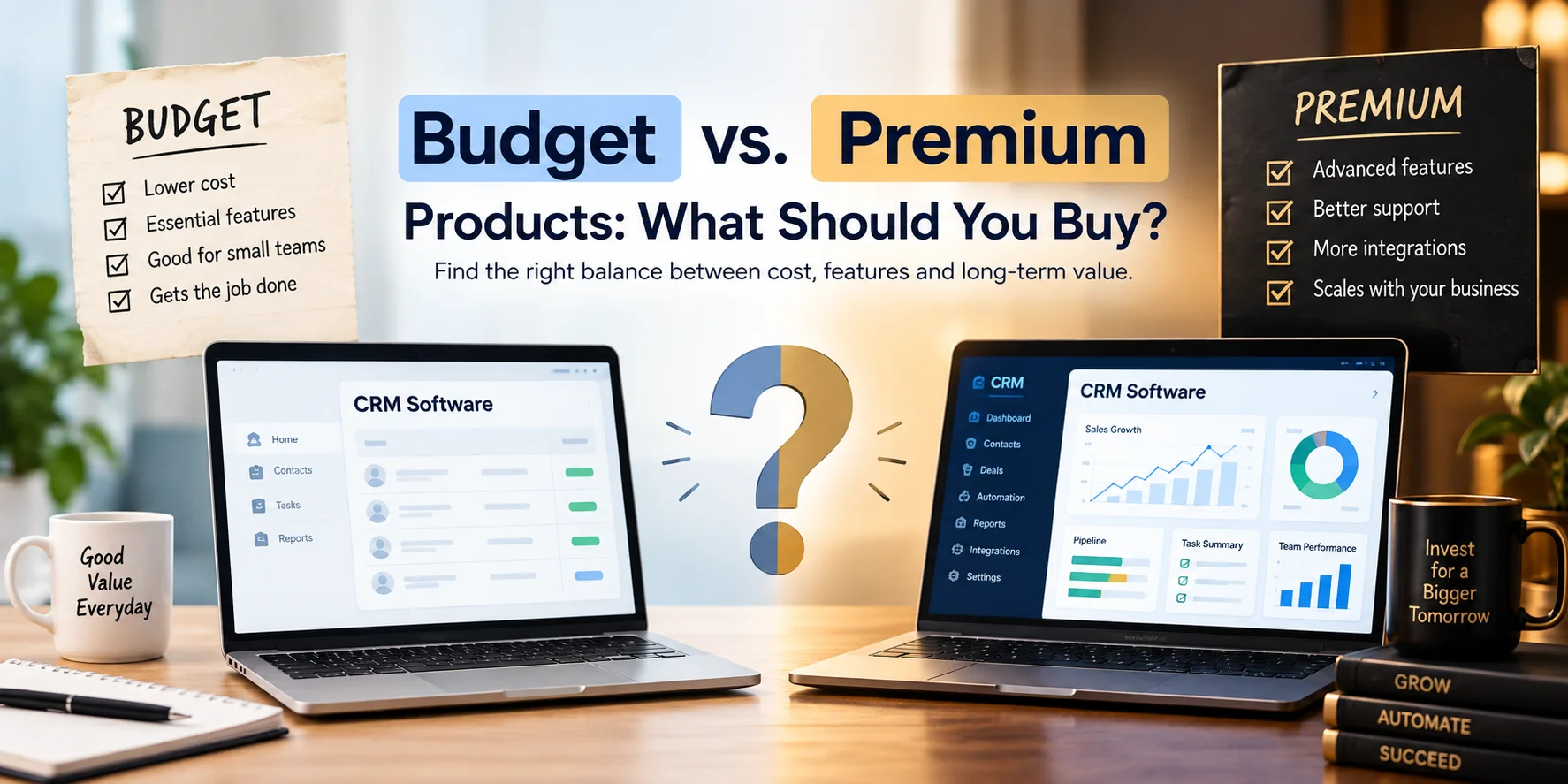
Choosing between a budget product and a premium one is rarely as simple as picking the cheaper price tag. The better choice depends on how often you will use the product, what you expect from it, and whether paying more solves a real problem. A low-cost platform can suit a small team, while a premium system may make sense for a company with complex sales and customer needs.
Start With What You Actually Need
Before spending more, look at the job the product needs to do. If a budget option handles that job reliably, there may be little reason to upgrade. Premium products often add stronger materials, extra functions, better support, or more room to grow.
For example, a small business choosing CRM Software may only need contact management, basic follow-ups, and a clear sales pipeline. A growing company may find that basic CRM Software creates extra manual work as customer records and sales activity increase.
The Real Cost Is More Than the Price
A cheaper product can become expensive if it breaks often, needs frequent replacement, or wastes time. When reviewing CRM Software, consider setup time, training, maintenance, upgrades, and the effort required to move data. A lower subscription may look attractive, but a difficult system can cost employees hours every week. A more expensive CRM Software package may be worthwhile if it reduces repetitive work and keeps customer information organized.
Think About How Long You’ll Use It
For something you will use occasionally, budget products often make sense. For products used every day, durability and comfort can matter more than the initial saving.
The same rule works for CRM Software. If your business is small and its processes are simple, starting with an affordable option can be practical. If you expect growth, choose CRM Software that can handle additional users, customers, and workflows without forcing an expensive switch later.
When Premium Is Worth Paying For
Premium products make sense when their added value connects to a real need. For businesses, premium CRM Software can be useful when teams need detailed reporting, advanced automation, integrations, permissions, or structured customer journeys. CRM Software should fit the way your team works.
A useful test is simple: ask whether the extra money saves time, reduces frustration, improves results, or prevents replacement. If the answer is no, the cheaper choice may be enough. If the answer is yes, paying more can be sensible when the benefit lasts.
A Smart Middle Ground
This approach can work well when selecting CRM Software. Compare a few options, identify the features your team will use every week, and ignore extras that do not solve a current problem. Good CRM Software should make work clearer and easier rather than create another system employees have to manage.
Make the Decision Based on Value
The best purchase is the one that delivers the right result at a sensible cost. Budget products can be smart when your needs are basic, while premium products can be worthwhile when quality, performance, or support directly affect results. Before choosing, consider frequency of use, expected lifespan, hidden costs, and future needs.
For a business comparing CRM Software, the same principle applies. Focus on usability, useful features, scalability, and total cost instead of the monthly price alone. The right CRM Software is the one your team can use consistently and that earns its cost through better organization and saved time.