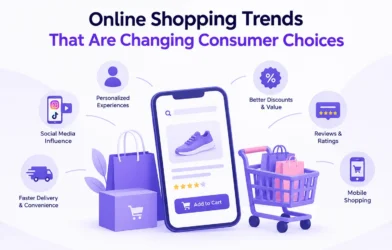
Online shopping has changed dramatically over the past few years. Consumers no longer rely only on websites to discover and purchase products. Social media platforms such as Instagram, Facebook, TikTok, and Pinterest have become important places for finding products, exploring brands, and making purchasing decisions.
This shift has brought two popular shopping models into focus: social commerce and traditional eCommerce. Although both involve buying and selling products online, they offer different shopping experiences. Understanding these differences can help businesses choose the right strategy and help consumers shop more effectively.
What Is Social Commerce?
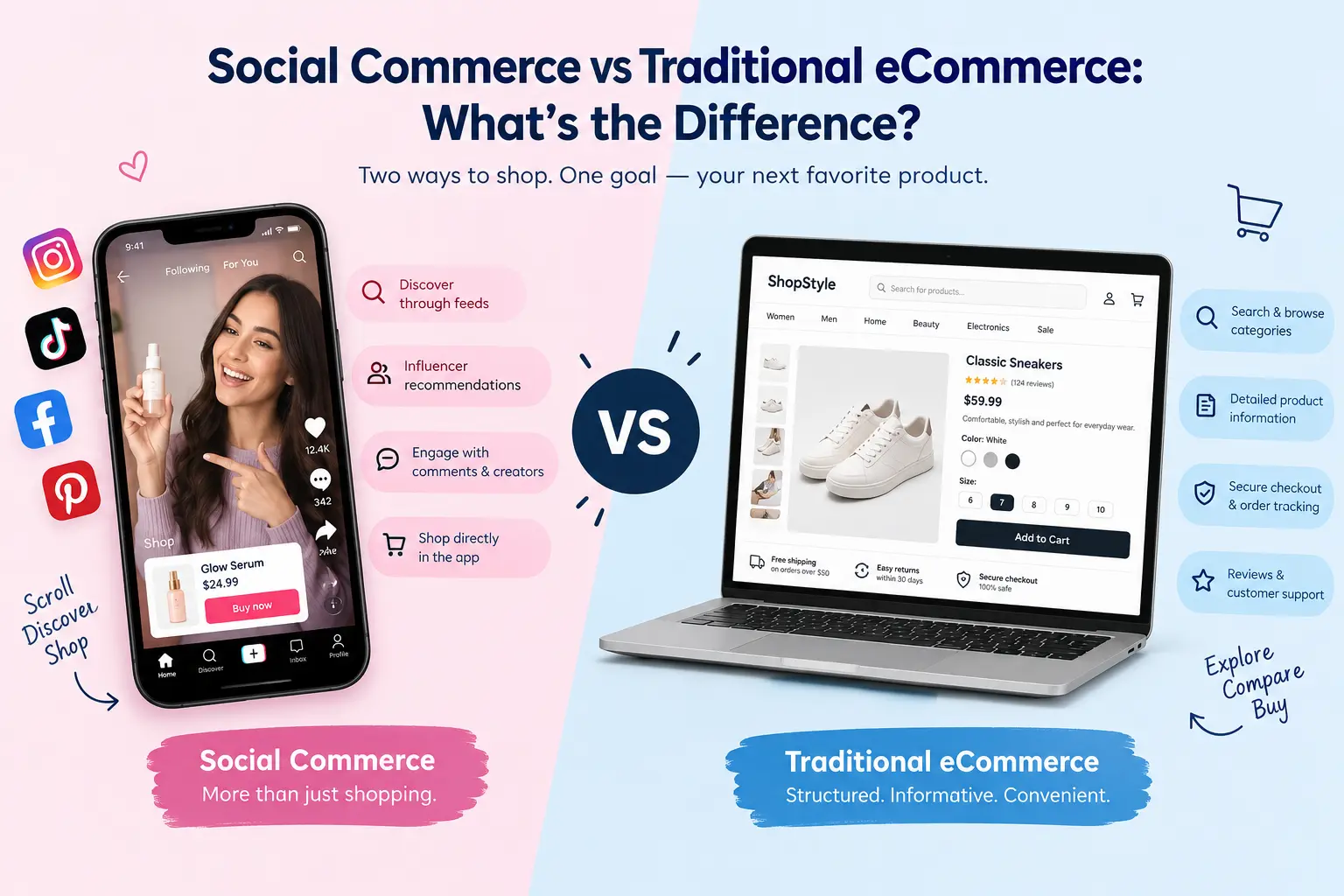
Social commerce is the process of discovering, promoting, and purchasing products directly through social media platforms or social media-driven shopping experiences.
Platforms such as Instagram, Facebook, and TikTok allow businesses to showcase products through posts, videos, livestreams, influencer collaborations, and shopping features. Depending on the platform and region, customers may be able to complete purchases without leaving the social media app.
For example, a customer might watch an Instagram Reel featuring a skincare product, read comments from other users, visit the brand’s product listing, and purchase the item through the available shopping checkout.
Social commerce combines entertainment, product discovery, community interaction, and shopping in one experience.
Key features of social commerce include:
- Product discovery through social media posts and videos.
- Influencer recommendations and creator partnerships.
- Customer reviews, comments, and user-generated content.
- Interactive shopping experiences, including livestreams.
- In-app purchasing where supported.
What Is Traditional eCommerce?
Traditional eCommerce refers to buying and selling products through online stores, brand websites, and dedicated shopping marketplaces.
Examples include Amazon, Walmart, and independent online stores built using platforms such as Shopify. Customers typically visit a website or marketplace, search for products, compare prices, read product descriptions, and complete their purchases through an online checkout.
Traditional eCommerce focuses on making the shopping journey convenient, informative, and efficient.
Key features of traditional eCommerce include:
- Dedicated online storefronts and product catalogues.
- Search filters and category-based navigation.
- Detailed product descriptions and specifications.
- Shopping carts and secure checkout systems.
- Product comparisons, reviews, and order tracking.
Social Commerce vs Traditional eCommerce: Key Differences
While both models support online sales, their main differences relate to product discovery, customer interaction, and the purchasing journey.
| Feature | Social Commerce | Traditional eCommerce |
|---|---|---|
| Main platform | Social media platforms | Online stores and marketplaces |
| Product discovery | Videos, posts, creators, and feeds | Search engines, categories, and product listings |
| Customer interaction | Comments, messages, and livestreams | Reviews, support chats, and customer service |
| Shopping experience | Social and interactive | Structured and transaction-focused |
| Marketing approach | Influencers, creators, and social content | SEO, paid search, email, and online advertising |
| Purchase journey | May happen within a social platform | Usually happens on a store or marketplace |
| Customer trust | Often influenced by creators and community feedback | Often influenced by reviews, policies, and brand reputation |
One important distinction is that social commerce is not always entirely in-app. Some platforms direct shoppers to external websites to complete their purchases.
Benefits of Social Commerce
Social commerce helps businesses connect with potential customers where they already spend time online.
1. Easier product discovery
Short videos, trending posts, and creator recommendations can introduce products to people who were not actively searching for them.
2. Stronger customer engagement
Businesses can interact with customers through comments, direct messages, livestreams, and other social features. These interactions can help answer questions and build relationships.
3. Influencer marketing opportunities
Creators can demonstrate products in real-life situations, helping audiences understand how products look, feel, or work.
4. Potentially shorter buying journeys
When shopping features and checkout are available within a platform, customers may be able to move from product discovery to purchase with fewer steps.
However, results depend on the platform, audience, product, and quality of the shopping experience.
Benefits of Traditional eCommerce
Traditional eCommerce provides businesses with greater control over their storefront and shopping experience.
1. Better product organization
Customers can browse categories, use filters, and compare products based on price, specifications, and other features.
2. Greater control over the website
Businesses can customize their branding, product pages, checkout process, and customer support experience.
3. Stronger opportunities for SEO
An optimized online store can attract customers through search engines when they look for specific products, comparisons, and buying guides.
4. More opportunities for customer retention
With appropriate consent and privacy practices, businesses can use email marketing, loyalty programs, and personalized recommendations to encourage repeat purchases.
Which Is Better for Your Business?
The right choice depends on your products, target audience, and marketing goals.
Social commerce may be a strong option for fashion, beauty, lifestyle products, and visually appealing items that benefit from demonstrations, creator recommendations, and community engagement.
Traditional eCommerce may be better suited to businesses that need detailed product catalogues, advanced search filters, extensive product information, and greater control over the customer journey.
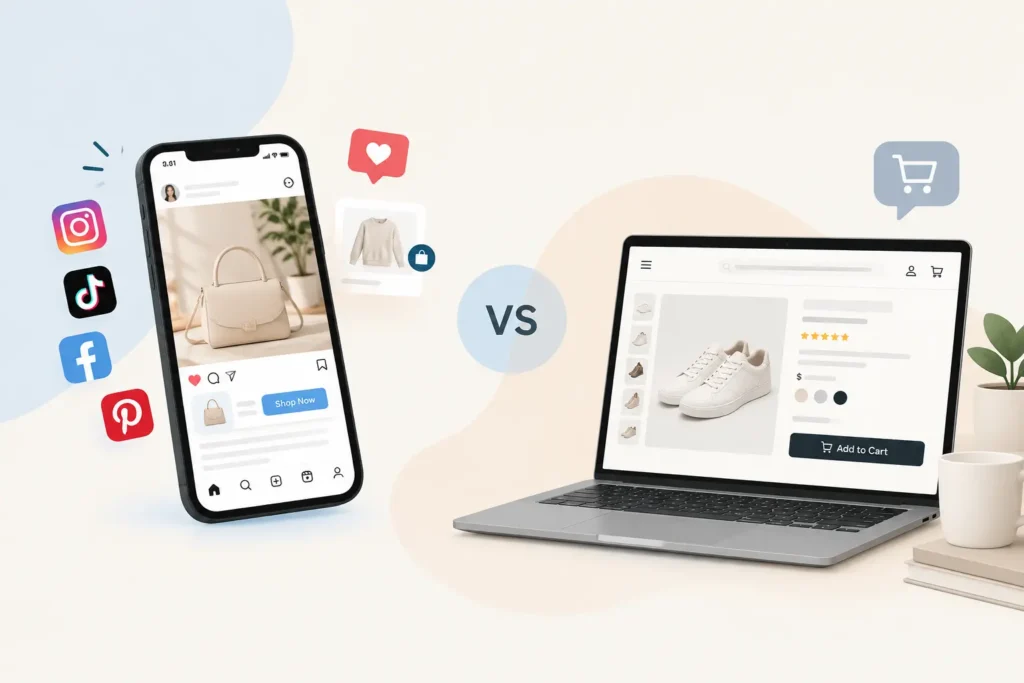
For many businesses, combining both approaches is the most practical strategy. Social media can help customers discover products, while an online store provides a dedicated place to explore options and complete purchases.
For example, a fashion brand could promote new arrivals through Instagram Reels and direct interested shoppers to its website for sizing information, product comparisons, and checkout.
Final Thoughts
Social commerce and traditional eCommerce both play important roles in modern online shopping. Social commerce emphasizes discovery, interaction, and community, while traditional eCommerce focuses on organized product browsing and the purchasing experience.
Rather than choosing one approach exclusively, businesses can combine social media marketing with a well-designed online store to reach more customers and create a smoother shopping journey.
As consumer habits continue to evolve, brands that understand where their audiences discover products—and what makes them comfortable purchasing—will be better positioned to compete in the digital marketplace.