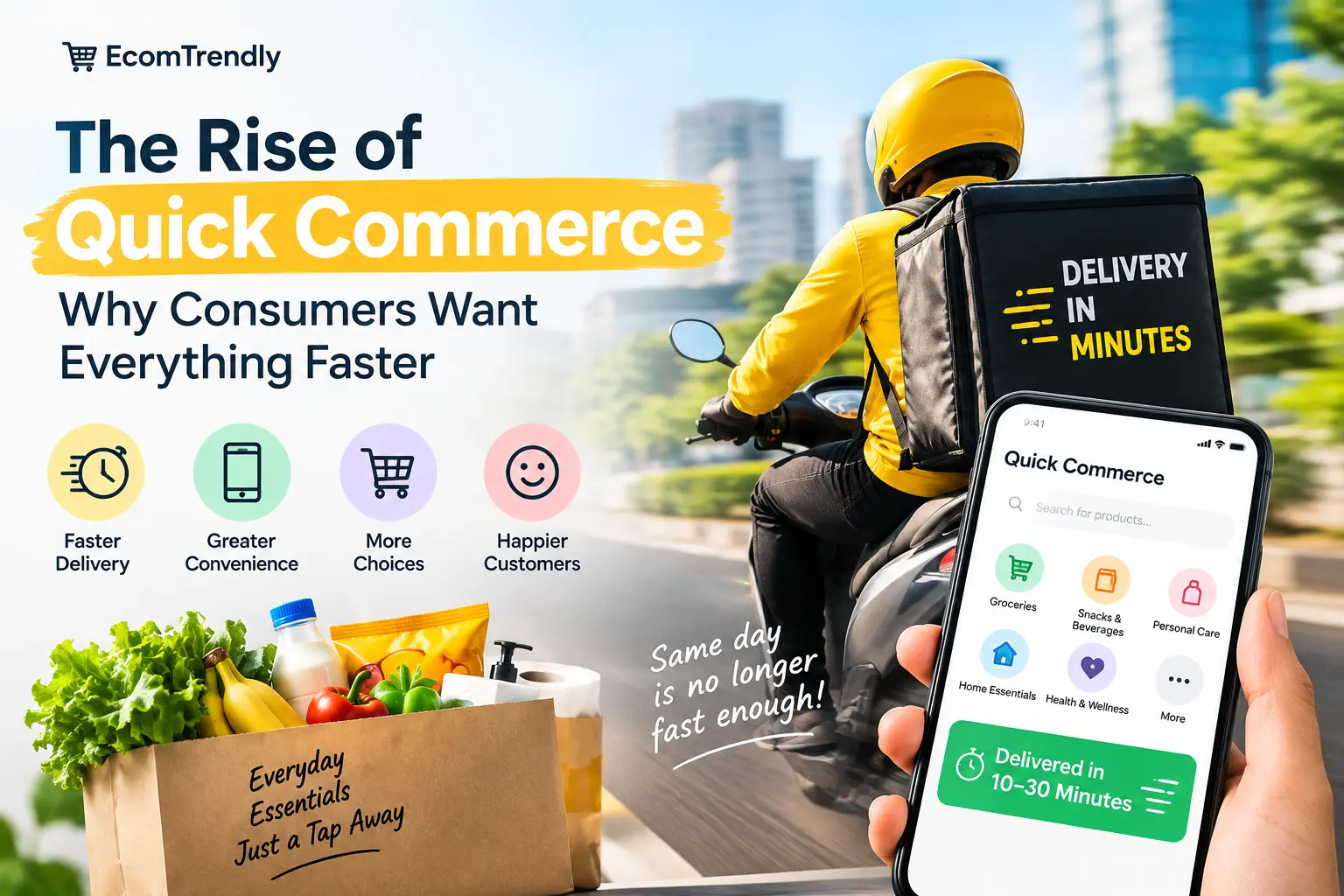
Online shopping has changed dramatically over the past decade. What started with customers waiting several days for their orders has evolved into a world where people can receive groceries, household essentials, beauty products, and even electronics within minutes. This shift has given rise to quick commerce, or “Q-commerce,” one of the fastest-growing trends in the online retail industry.
But why are consumers becoming so obsessed with speed?
What Is Quick Commerce?
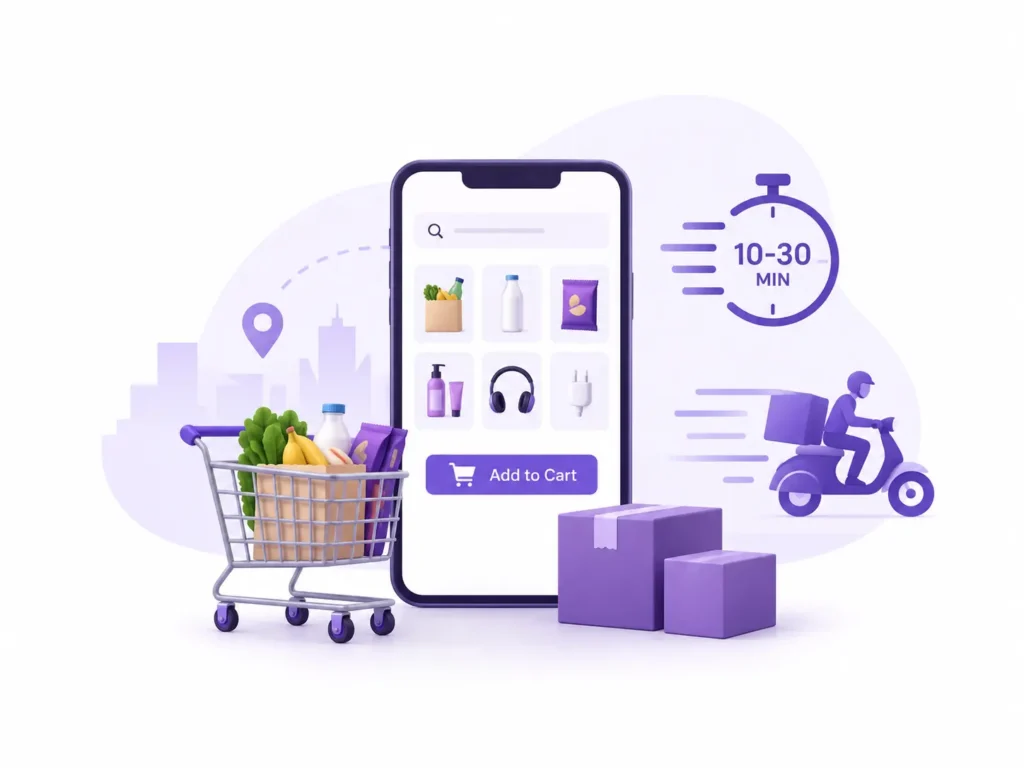
Quick commerce refers to the delivery of products to customers within a very short period, often 10 to 30 minutes. Unlike traditional e-commerce, which typically relies on large warehouses and longer delivery networks, quick-commerce companies use strategically located “dark stores” or small fulfillment centers closer to residential areas.
The goal is simple: make everyday products available almost instantly.
Apps and platforms offering rapid delivery have made this concept increasingly popular, particularly in large cities where consumers value convenience and time.
Convenience Is the Biggest Driver
One of the main reasons behind the growth of quick commerce is convenience. Consumers no longer want to plan every small purchase in advance.
Forgot to buy milk? Need snacks for unexpected guests? Ran out of phone chargers or toiletries? Instead of visiting a store, shoppers can open an app, place an order, and have the product delivered shortly afterward.
This convenience fits perfectly into increasingly busy lifestyles. For working professionals, students, parents, and people living in urban areas, saving even 30 minutes can make a significant difference.
Consumers Are Becoming Less Patient
The growth of on-demand services has also changed customer expectations. Food delivery, ride-hailing, streaming, and instant digital payments have trained consumers to expect fast service.
As a result, waiting several days for a simple product can feel unnecessary.
Quick commerce has capitalized on this behavioral change by turning speed into a competitive advantage. The faster and more reliable the service, the more likely customers are to return.
Impulse Buying Is Fueling Growth
Another important factor is impulse purchasing. When products are available almost immediately, consumers may be more willing to make spontaneous purchases.
A customer might open a quick-commerce app looking for one item and end up buying snacks, beverages, personal-care products, or other essentials.
This creates additional opportunities for retailers and brands. Product recommendations, limited-time offers, and strategically displayed products can encourage customers to add more items to their carts.
The Role of Technology
Quick commerce would not be possible without technology. Companies rely on sophisticated inventory management systems, demand forecasting, route optimization, and real-time order tracking to deliver products quickly.
Data can also help businesses predict which products are likely to be needed in specific neighborhoods. By keeping popular products closer to customers, companies can reduce delivery times while improving operational efficiency.
Is Faster Always Better?
Despite its convenience, quick commerce faces challenges. Maintaining multiple local fulfillment centers can be expensive, while rapid delivery puts pressure on logistics networks and delivery workers.
There are also questions about packaging waste, unnecessary impulse purchases, and whether ultra-fast delivery is always environmentally sustainable.
For the industry to grow responsibly, companies will need to balance speed, affordability, efficiency, and sustainability.
What Does the Future Hold?
Quick commerce is more than a temporary shopping trend. It reflects a broader change in consumer expectations: people increasingly value convenience, immediacy, and friction-less shopping experiences.
As technology improves and delivery networks become more efficient, quick commerce could expand beyond groceries and everyday essentials into categories such as fashion, electronics, beauty, and healthcare products.
The biggest lesson for retailers is clear: consumers don’t simply want more choices—they want easier and faster access to those choices.
Quick commerce has raised the bar for online shopping. The question is no longer just “What can I buy online?” but increasingly, “How quickly can I get it?”